


It's a wrap! That was the Non-GMO Summit 2026:


International Non-GMO Summit 2026: Strong signal - “Non-GMO” has a future!
Food labelling such as “Non-GMO” and Organic is set to become even more important in the future as a result of the EU’s planned deregulation of new genomic techniques (NGTs). According to the conclusions of the Non-GMO Summit 2026, the agriculture and food sectors can - and will - rise to the challenges associated with the new rules.
More than 120 representatives from the food industry, science, laboratories, market research, legal practice, public authorities, associations, and media from 14 countries gathered in Frankfurt on 13 May 2026 for the international industry conference. The focus was on the future of “Non-GMO” in light of the upcoming EU deregulation of “new genomic techniques” (NGTs).
“Consumers want transparency,” said German Federal Minister of Agriculture Alois Rainer (CSU) in his video address opening the conference. He stressed that “Non-GMO” labelling has become a reliable tool and an essential component of a responsible market. In his view, the “high standards for labelling and traceability” associated with “Non-GMO” can be maintained even after NGT deregulation. However, this will require “reliable detection methods to ensure that monitoring and trust continue to be guaranteed.”
Ulrike Königsberger-Ludwig (SPÖ), State Secretary at Austria’s Federal Ministry of Labour, Social Affairs, Health, Care and Consumer Protection, criticised the planned removal of mandatory labelling for a large share of future genetic engineering products: “This lack of labelling significantly restricts consumers’ freedom of choice.” Austria therefore voted against deregulation at EU level.
Taras Vysotskyi, Deputy Minister for Economy, Environment and Agriculture of Ukraine, announced comprehensive reforms to Ukraine’s GMO regulatory framework. The aim is full alignment with European standards. In the long term, Ukraine seeks to position itself as a reliable supplier of Non-GMO agricultural products to Europe.
“This summit has clearly shown that consumer attitudes towards NGTs are unambiguous: a large majority do not want them on their plates, and almost all want clear labelling. These are ideal conditions for an industry that meets exactly these consumer expectations. If NGT wheat, barley or bananas enter the market without labelling, I am curious to see who will be the first to use the ‘Non-GMO’ label on their bread, beer or baby food,” said Alexander Hissting, Managing Director of the German Association for Food without Genetic Engineering (VLOG). “To achieve this, we need workable legal frameworks, which we are ready to help develop together with policymakers. We welcome the support that has been announced.”
Through a series of presentations and panel discussions with practitioners and experts from the food industry, “Non-GMO” and organic associations, public authorities, legal experts, detection specialists and market researchers, the Non-GMO Summit 2026 highlighted once again that the upcoming NGT deregulation will pose significant challenges for both the organic and “Non-GMO” sectors - and demonstrated how these challenges can be addressed.
Among other topics, initial concepts were presented by “Non-GMO” associations on adapting existing systems to ensure the exclusion of NGT use. Participants also gained insights into the current state of development of NGT detection methods, legal assessments of coexistence rules for NGTs, and new market research findings on consumer expectations regarding NGTs.
The International Non-GMO Summit 2026 was jointly organised by the European Non-GMO Industry Association (ENGA), Verband Lebensmittel ohne Gentechnik e.V. (VLOG), ARGE Gentechnik-frei, Donau Soja and the ProTerra Foundation.
How to deal with New GMOs in Non-GMO feed and food chains
Summit Aims of the International Non-GMO Summit 2026
-
Provide answers: How can Non-GMO labelling continue to prosper after a deregulation of New GMOs? (with a particular focus on cost-efficiency)
-
Secure/support stability of existing Non-GMO markets (= keeping Non-GMO producers in business)
-
Explore potential of Non-GMO markets in a landscape of coexistence with New GMOs
-
Explore possible segment extensions – from Non-GMO products derived from animals to plant-based products
-
Establish supplier agreements as a key tool to maintain traceability in a market where New GMOs could be present
-
Spread the message: Non-GMO and organic business sectors as strategic allies in establishing traceability of New GMOs and preserving Non-GMO quality
-
Involvement of the entire chain, from agriculture onwards
Follow us on LinkedIn and receive regular updates on the International Non-GMO Summit!
The International Non-GMO Summit 2026 will be hosted and coordinated by the key business associations in the Non-GMO market.
13 May 2026
Frankfurt/Main, Germany


Programme
Moderation: Dr Tanja Busse
08:00 Start of Registration
09:00 - 09:15 Welcome and formal opening
Welcome addresses (by video):
Alois Rainer
German Federal Minister of Agriculture, Food and Regional Identity
Ulrike Königsberger-Ludwig
Austrian State Secretary for Labour, Social Affairs, Health, Care and Consumer Protection
Taras Vysotskyi
Ukrainian Deputy Minister of Economy, Environment and Agriculture
09:15 - 09:30 Keynote speech
Speaker: Dr Friedhelm von Mering
Team Lead Legal & Policy Affairs, BÖLW (German umbrella organisation of organic farmers, food processors, and retailers)
09:30 - 10:30 Legal framework conditions and New GMOs on the market: Challenges for the European food and feed sector
09:30 - 09:50 New GMOs legal framework in the EU: State of play
Speaker: Dr Andreas Heissenberger
Unit Head, Team Landuse & Biosafety, Environment Agency Austria
09:50 - 10:05 Why New GMOs are not equivalent to conventional breeding
Speaker: Dr Margret Engelhard
Head of Department GMO Regulation, Federal Agency for Nature conservation, Germany
10:05 - 10:30 New GMOs Market Report 2026: Which crops are present in different markets and in development pipelines?
Speaker: Dr Eva Gelinsky
Freelance scientist, semnar, Switzerland
10:30 - 11:00 Coffee break
11:00 - 12:30 How to exclude New GMOs in Non-GMO value chains?
11:00 - 11:30 Adapting existing Non-GMO standards to exclude New GMOs and their derivates
Speaker:
Kerstin Geißler
Head Quality Assurance, Association Food without Genetic Engineering (VLOG), Germany
Florian Faber
Managing Director, ARGE Gentechnik-frei, Austria
11:30 - 11:45 Smart Seed Choices: Minimising GMO Contanimation Risk on Farm
Speaker: Dr Freya Schäfer
Senior Scientist, FiBL (Research Institute of Organic Agriculture), Germany
11:45 - 12:15 Excluding New GMOs in value chains: State of play in the development of detection methods
Speaker: Dr Marie-Alice Fraiture
Senior scientist, Sciensano, Belgium (DARWIN Project)
12:15 - 13:30 Lunch break
13:30 - 14:30 Panel discussion: How will practitioners deal with a new EU legislation?
Panelists:
Barbara Endraß
Organic farmer, Co-owner Biohof Endraß, Germany
Martine Boon
Managing Director, GMP+ International, The Netherlands
Wolfgang Ahammer
General Manager, VFI Oils for Life, Austria
Yvonne Profanter
Head of Global Communication, Loacker AG, S.p.A., Italy
14:30 - 15:00 What are the rules for coexistence with New GMOs?
Speaker: Dr Georg Buchholz
Lawyer and partner in the Berlin law firm GGSC, Germany
15:00 - 15:30 Market update: Worldwide supply and demand of Non-GMO soy
Speaker:
Volodymyr Pugachov
Executive Director, Regional Director Eastern Europe, Donau Soja, Ukraine
Emese van Maanen
Managing Director, ProTerra Foundation, The Netherlands
15:30 - 16:00 Under new legislation: Exploring future potential for Non-GMO labelling
Speaker: Prof Dr Holger Buxel
Professor, FH Münster University of Applied Sciences, Germany
16:00 - 16:15 Conclusion and Call to Action
16:15 Finish with Coffee and Cake
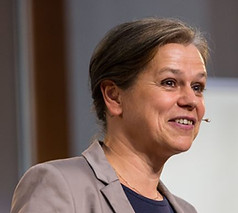
Moderation
Tanja Busse
Author and Moderator
Dr Tanja Busse writes books on agriculture, nutrition and biodiversity and she moderates conferences. She studied journalism and philosophy in Dortmund, Bochum and Pisa. Her latest book, published with Christiane Grefe ("Der Grund") is about protecting our soils.
Speakers & Panelists
 Alois RainerGerman Federal Minister of Agriculture, Food and Regional Identity |  Ulrike Königsberger-LudwigAustrian State Secretary for Labour, Social Affairs, Health, Care and Consumer Protection |  Taras VysotzkyiUkrainian Deputy Minister of Economy, Environment and Agriculture |
|---|---|---|
 Friedhelm von MeringTeam Lead Legal & Policy Affairs, BÖLW (German umbrella organisation of organic farmers, food processors, and retailers) A Biologist by training, Dr von Mering has been following the development of the Organic and GMO industry for more than 30 years. After a stint as Sales Director in an organic company, he worked for the Bioland Association focusing on food processors and value chain management. From 2010-2015 he supported Members of the German Federal Parliament as Political Adviser. |  Wolfgang AhammerGeneral Manager, VFI Oils for Life, Austria Wolfgang Ahammer has been with VFI since 2000 and has served as General Manager since 2014. VFI is a major Austrian producer of vegetable oils, fats and animal feed and leading manufacturer of oils for the production of organic and Non-GMO food in Europe. He is a board member of European Non-GMO Industry Association (ENGA), German Association of Organic Food Producers (AÖL) and Austrian Association of the Branded Goods Industry. |  Martine BoonManaging Director, GMP+ International, The Netherlands Martine has been Managing Director of GMP+ International since 2024. Before that, Martine built a career at Rabobank, the world’s leading Food & Agri bank and worked as Director of Food & Agri Transition and Sector Management. At Rabobank she created a financing package to accelerate the transition to sustainable agriculture and food production. She holds a Master’s degree in Agricultural Economics from Wageningen University & Research. |
 Georg BuchholzLawyer and Partner, Berlin law firm GGSC (Gaßner, Groth, Siederer & Coll., Partnerschaft von Rechtsanwälten mbB), Germany Dr Georg Buchholz has been a lawyer at the Berlin law firm [GGSC] since 2004 and has been a partner at the firm since 2021. His areas of expertise include biotechnology and food law, as well as various areas of environmental law. His clients include federal, state and local authorities, public and private companies, and NGOs. |  Holger BuxelProfessor, FH Münster University of Applied Sciences, Germany Prof Dr Holger Buxel is a professor for marketing in the food and packaging business at FH Münster University of Applied Sciences. He has over 25 years of market research and product management experience in the food and packaging sector and has conducted several studies on customer and market trends in the business. |  Barbara EndraßOrganic Farmer, Biohof Endraß, Germany Barbara is an organic farmer and Chairwoman of Germany’s Association for small and medium-sized farms. She studied agriculture with a focus on crop production and breeding at Nürtingen University of Applied Sciences, then took over the farm and became self-employed as an agricultural entrepreneur in 1994. Her focus is on special crops, farming laying hens, rearing young hens and she brings expertise on farm slaughtering and direct and regional marketing. |
 Margret EngelhardHead of Division "Assessment Synthetic Biology, Enforcement Genetic Engineering Act", Federal Agency for Nature Conservation, Germany Dr Margret Engelhard is micro- and molecular biologist, with a long expertise in interdisciplinary technology assessment research. Since 2016 she has been Head of the GMO Biosafety Division at the Federal Agency for Nature Conservation (BfN). The BfN - as federal authority - is involved in the risk assessment of GMOs on national and European levels. |  Florian FaberManaging Director, ARGE Gentechnik-frei, Austria Florian Faber co-founded ARGE Gentechnik-frei in 1997. It was Europe’s first labelling system for Non-GMO food and feed products. As a specialist in strategic communications and sustainability, he has established Non-GMO labelling as one of the most credible and respected quality assets on the Austrian food market. In addition, he is Chairman of the European Non-GMO Industry Association ENGA. |  Marie-Alice FraitureSenior Scientist, Sciensano, Belgium Dr Marie-Alice Fraiture has a Bachelor’s in Biology and a Master’s in Biochemistry and Molecular and Cellular Biology. She completed her PhD through a collaboration between Ghent University, ILVO and Sciensano, with a dissertation entitled Strategies to Detect Unauthorized GMOs in the Food and Feed Chain. Her current work includes the improvement of GMO detection. She is the author of 48 peer-reviewed publications. |
 Kerstin GeißlerHead Quality Assurance, Association Food without Genetic Engineering (VLOG), Germany Kerstin Geißler completed her studies with an M.Sc. in Agroecology. After working for several years as an auditor and certifier for organic agriculture at a large German organic inspection body, she took over quality assurance at VLOG in 2015. Under her leadership, the VLOG certification system and the VLOG Integrity Programme have continuously developed. |  Eva GelinskyFreelance Scientist, semnar, Switzerland Dr Eva Gelinsky is a freelance scientist based in Switzerland. Her clients include Bio Suisse and the Swiss Federal Office for the Environment. As political coordinator of the Initiative for Non-GMO seeds and breeding (with Lena Hüttmann), she focuses on genetic engineering and patents from a seed and breeding perspective. |  Andreas HeissenbergerUnit Head, Team Landuse & Biosafety, Environment Agency Austria Dr Andreas Heissenberger, MA, is Head of the Team Landuse & Biosafety at the Environment Agency Austria. He has worked for more than 25 years on regulatory and scientific aspects of genetic engineering at national and international level, including labelling and traceability. He has co-authored several studies in this field. He is a member of the Austrian delegation to the EU council working group on new genomic techniques. |
 Yvonne ProfanterHead of Global Communication, Loacker AG, S.p.A., Italy Yvonne Profanter is Head of Communication at Loacker, leading the global communication strategy since 2015. A native of South Tyrol, she is passionate about the role authenticity, transparent sourcing, and sustainable innovation play in shaping consumer trust. Prior to Loacker, Yvonne built 15 years of international experience in marketing and brand strategy across FMCG and luxury, with leadership roles at P&G and Wella. |  Volodymyr PugachovExecutive Director, Regional Director Eastern Europe, Donau Soja Organisation Volodymyr Pugachov has over a decade of experience at institutions like NGOs, scientific organisations, international projects, and State Authorities. He is skilled in sustainable agriculture, food and feed standards and regulations development, risk assessment for sustainable cultivation in Europe, international agriculture value chains establishment and verification according to sustainable production standards. |  Freya SchäferSenior Scientist, FiBL (Research Institute of Organic Agriculture), Germany Dr Freya Schäfer is a researcher and project coordinator in organic seed and plant breeding, focusing on EU-wide seed policy and knowledge transfer for a resilient organic farming sector. This talk will show how smart seed sourcing and variety choice can dramatically reduce the risk of hidden GMOs in fields and value chains, turning the choice of seeds into a powerful safeguard for ensuring Non-GMO. |
 Emese van MaanenManaging Director, ProTerra Foundation, The Netherlands Emese van Maanen is the Managing Director of the ProTerra Foundation. She has a strong background in the international agricultural sector, having developed and led raw material procurement, CSR and sustainability for large agricultural cooperatives. Emese is an agricultural engineer with additional university degrees in science, international trade and economics. |
About Us

ARGE Gentechnik-frei (Platform for GMO-free Food Products) has been a pioneer in the Non-GMO sector for 25 years. Founded in Austria in 1997, ARGE Gentechnik-frei is Europe’s most widespread Non-GMO labelling system, with several complete production segments (dairy, poultry, eggs) labelled “Ohne Gentechnik hergestellt”.

Donau Soja is a European, multi-stakeholder and non-profit organisation supporting the European Protein Transition with a particular emphasis on sustainable, deforestation-free, Non-GM soy production. The organisation is based in Vienna, with regional offices in Serbia, Ukraine and Moldova, supported by more than 330 active members in 32 countries and 24 European governments.

The European Non-GMO Industry Association (ENGA) is the voice of the Non-GMO food and feed sector at the EU level. It secures and supports the expansion of Non-GMO production and advocates for the strict regulation of old and new GMOs in order to keep untested GMOs from entering the EU food and feed chains.

The ProTerra Foundation is a Dutch non-profit organization, founded in 2012, that creates a global network of companies that support more sustainable agricultural practices in the food and feed supply chains. The ProTerra Foundation holds the Non-GMO ProTerra certification standard and related audit methodology.

The German Association for Food without Genetic Engineering (VLOG) provides a platform for the exchange of information in the production and marketing of "Ohne Gentechnik" (Non-GMO) food and animal feed. VLOG assigns the "Ohne GenTechnik" seal for food and the "VLOG geprüft" (VLOG verified) seal for feed.